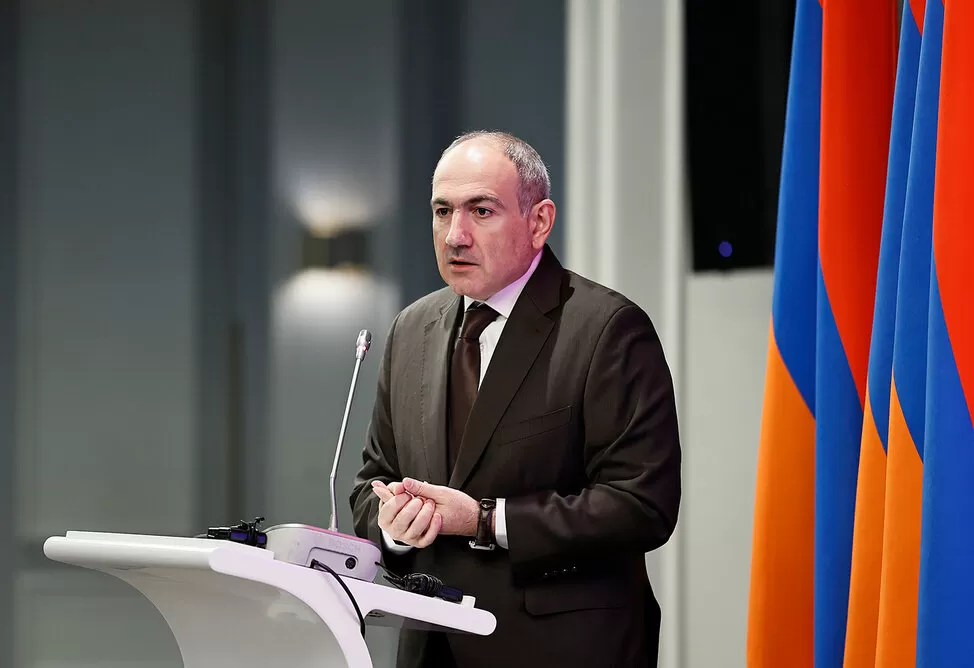
Pashinyan rules out military presence in TRIPP project
Armenian Prime Minister Nikol Pashinyan said on November 26, 2026, that there would be no military presence in the TRIPP transport project, Sputnik Armenia reported. Speaking at a briefing after a government meeting, he gave assurances that the project would not cross Iran’s red lines.
Yerevan and Tehran discuss plans for TRIPP through Syunik
Pashinyan said Yerevan was in regular talks with its Iranian partners about how to implement the project. There were no “dark corners” in the process, he said.
Iranian Foreign Ministry spokesperson Esmail Baghaei had said earlier that Tehran would not simply take Armenia’s assurances at face value and would closely monitor how the parties implement TRIPP. He spoke an hour before the project’s official launch. Baghaei stressed that Iran’s position on matters of principle had not changed.
Tehran supports expanding economic ties and reopening transport links in the South Caucasus. It insists, however, that those involved in the project take into account the interests of neighboring countries and other countries in the region and leave the region’s geopolitical configuration unchanged.
TRIPP, or the Trump Route for International Peace and Prosperity, calls for a transit route through Armenia’s Syunik region. Under the plan, the route would operate solely under Armenian jurisdiction without affecting the country’s sovereignty. Azerbaijan expects to use it to establish a land link with Nakhchivan.
Under the plan, Armenia would grant the United States exclusive rights to develop the route for up to 99 years. The two sides plan to set up a company in which the United States would hold a controlling stake, while Armenia would retain oversight mechanisms on key issues. The proposed initial split is 74% for the United States and 26% for Armenia. If the agreement is extended, Armenia’s stake could rise to 49%.
Armenia and the United States initialed the framework agreement on May 26 during U.S. Secretary of State Marco Rubio’s brief visit to Yerevan. The two sides signed the document in early June.
Mikhail Kalugin, director of the Russian Foreign Ministry’s Fourth Department for CIS Countries, previously raised concerns about the geopolitical and infrastructure risks posed by TRIPP. Russia views the Trump Route as part of a transport initiative intended to link Central Asia with Europe via the South Caucasus.
Moscow points to the Russian border guards stationed on the Armenian-Iranian border. Russia says that connecting to Azerbaijan’s rail network requires Russian-standard track gauge. A concession agreement with South Caucasus Railway CJSC, part of Russian Railways, also remains in force until 2038.
Moscow also notes that Armenia remains a member of the Eurasian Economic Union and part of its common customs territory. Russia has said it is prepared to consider taking part in TRIPP in light of its longstanding railway cooperation with Armenia. Moscow insists, however, on a detailed review of the project’s parameters and how it will be implemented.