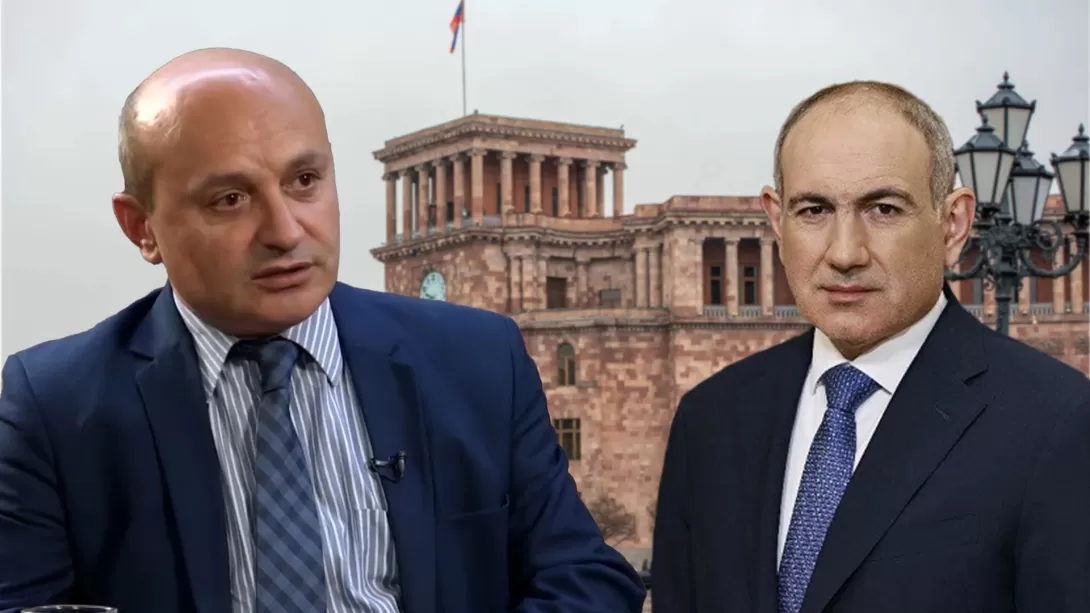
Safaryan proposes a new strategic partnership treaty between Armenia and Russia
Aram Safaryan proposed a new strategic partnership treaty between Armenia and Russia, using Yerevan’s agreements with other partners as a model. Moskovsky Komsomolets reported on his remarks at a roundtable in Moscow in an article published on November 2, 2026.
The roundtable, “Prospects for the Further Development of Russian-Armenian Relations,” took place on October 30, 2026, at the Institute of CIS Countries in Moscow. Participants discussed the deterioration in bilateral relations. Aleksandr Markarov, director of the institute’s office in Armenia, traced the start of that process to Nikol Pashinyan’s team coming to power in 2018.
Safaryan, who heads the Center for Russian Studies at Yerevan State University, cited Armenia’s agreements with the European Union, the United States and Kazakhstan as models for a future treaty. He also mentioned forthcoming documents with Iran and France. In his view, Armenia’s current leadership could sign a treaty with Russia that would mark the beginning of a new relationship.
Safaryan said his organization was in its sixth year of helping compile a ranking of post-Soviet countries’ friendliness toward Russia. In the ranking for 2025, Armenia placed eighth among 16 participants, including Abkhazia and South Ossetia. Discussing the Collective Security Treaty Organization (CSTO), he said Armenia’s leadership did not want to begin the withdrawal process, although he found it difficult to imagine the country resuming participation in the organization’s work.
Russian political analyst Andrey Areshev disagreed with Safaryan. Before discussing a new treaty, he suggested establishing who would draft it on the Armenian and Russian sides. In his assessment, some Western-educated officials appointed in Armenia attach little importance to Russian-Armenian ties, while Russia does not fully understand the policies of Armenia’s current leadership.
Areshev identified a declaratory document on launching Armenia’s accession process to the European Union as one factor behind the deterioration in relations. He also criticized the Armenian leadership’s approach to contentious issues. In his view, Yerevan rushes to discuss them publicly rather than first holding talks in private.
Areshev also addressed a report on the consequences of Armenia’s possible withdrawal from the Eurasian Economic Union (EAEU). He claimed that Yerevan had been given until December 2026 to make a final decision. He predicted that Armenia could be expelled from the bloc or have its membership frozen.