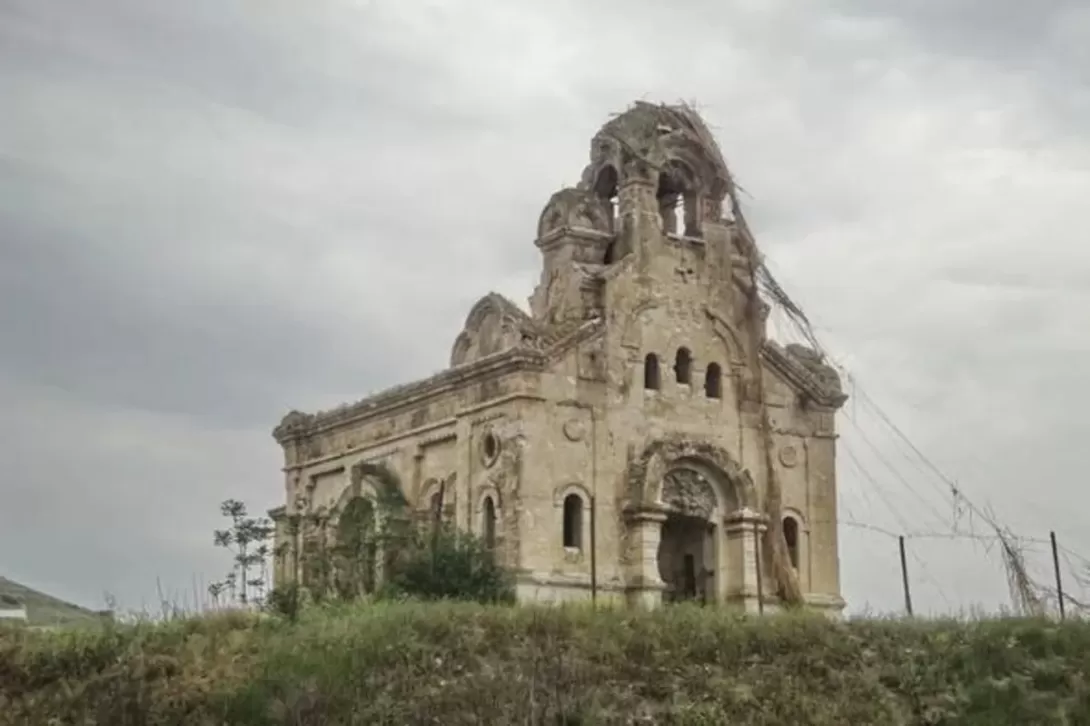
Rights groups present report on the destruction of Armenian heritage and obstacles to returning to Artsakh
Human rights organizations have published a joint report on the destruction of Artsakh’s Armenian heritage and the obstacles preventing forcibly displaced residents from returning, Yerkramas reports. The authors link the destruction of homes and monuments to the loss of the conditions communities need to live in their homeland.
The report was prepared by the Artsakh Union NGO, the Center for International and Comparative Law (ICLaw), and the Rule of Law human rights NGO. Its co-authors include Artsakh Union chairman Artak Beglaryan and Gegham Stepanyan, a member of the organization’s executive board and Artsakh’s Human Rights Defender. The work was supported by the Armenian Legal Center for Justice and Human Rights (ALC) and the French-Armenian Association for Support of Artsakh.
The study covers territories of Artsakh that came under Azerbaijani control after the 44-day war in 2020 and the military operations in September 2023. The authors examined photographs and videos published online, reviewed investigative reporting by international media outlets, and compared satellite images from different periods.
The researchers say they documented numerous instances of the destruction and alteration of Armenian historical and cultural monuments, as well as the demolition of residential neighborhoods and entire settlements. They describe the destruction of spiritual and cultural heritage as systematic. In their assessment, these actions undermine communal memory, preventing subsequent generations from inheriting their faith and national traditions.
The authors devoted a separate section to the settlement of Armenian towns and villages under Azerbaijan’s “Great Return” program, which they consider illegal. The report describes new buildings erected on the sites of demolished Armenian homes, as well as neighborhoods that have been razed. By losing their homes and property, displaced residents are being deprived of the material foundations for returning to their communities, the researchers stress.
The authors characterize the Azerbaijani actions described in the report as human rights violations and crimes. In their view, these actions contravene international norms and a number of rulings by the UN’s International Court of Justice concerning the rights of Artsakh’s residents.
The organizations called on the international community and relevant bodies to take urgent action to stop the further destruction of Armenian heritage and property, preserve monuments, and ensure that the people of Artsakh can access them. The authors argue that the right of return entails a genuine, guaranteed opportunity to live safely and with dignity in one’s homeland. For displaced residents, this means being able to preserve their identity and rebuild community life.