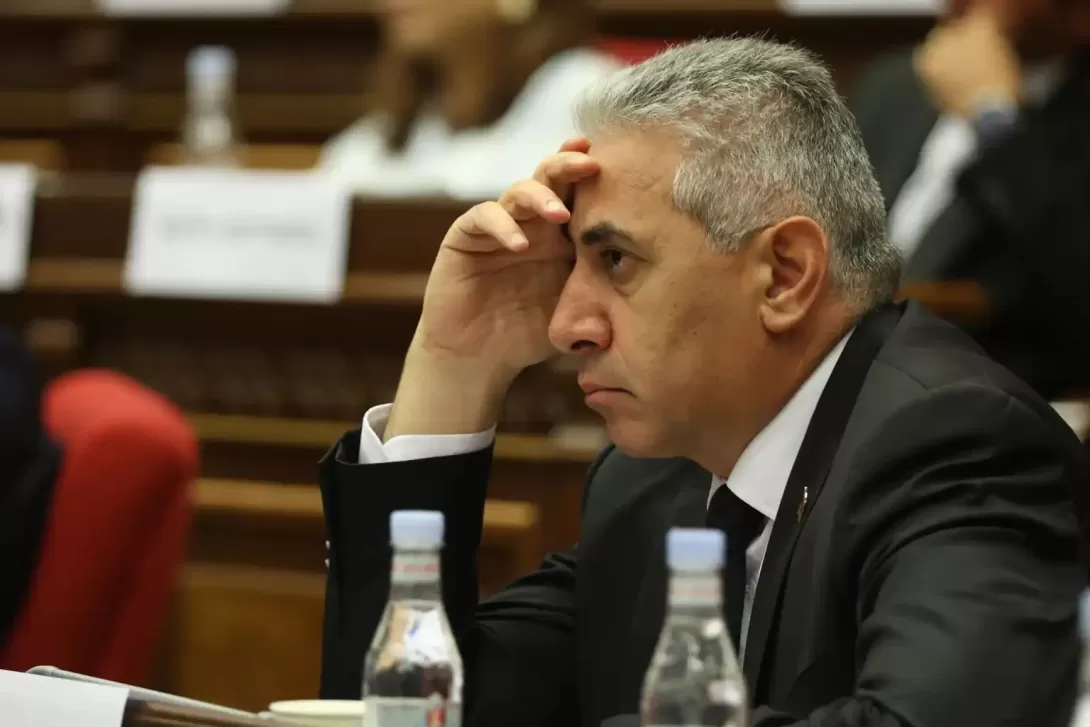
Armenian opposition discusses the Constitution and the country’s future with young people
Representatives of Armenia’s opposition discussed changes to the country’s Constitution with young people, Yerkramas reports. Participants also discussed Armenia’s future political system and reforms they propose debating after a possible change of government.
Anna Grigoryan challenges claim that refusing to change the Constitution would lead to war
Anna Grigoryan, leader of the Armenia parliamentary faction, said that refusing to change the Constitution would not lead to war. In her assessment, after 2020, Baku shifted its focus from demands concerning the rights of the people of Nagorno-Karabakh to Armenia’s Declaration of Independence and Constitution.
The Strong Armenia party organized the event to examine the risks of the so-called “Aliyev constitution” and develop a national agenda. The opposition described attempts by Nikol Pashinyan’s government to link retaining the Constitution to the inevitability of another armed conflict as blackmail and an effort to conceal diplomatic failures.
Aram Vardevanyan says constitutional change is Baku’s precondition
Aram Vardevanyan, deputy speaker of Armenia’s National Assembly from the Strong Armenia faction, linked the inability to sign a peace treaty to Azerbaijan’s new precondition: changing the Constitution. He called the situation absurd. In his assessment, there is no precedent in international practice for one country dictating the text of another’s constitution.
Vardevanyan recalled that on June 7, the public made it clear to the authorities that it rejected the imposed constitutional reform. He described the rejection of a constitution imposed from abroad as natural.
Levon Zurabyan accuses authorities of putting pressure on the Armenian Apostolic Church
Levon Zurabyan, deputy chairman of the Armenian National Congress, accused Prime Minister Nikol Pashinyan of betraying national interests. He said the head of government was dismantling the nation-state and seeking to create a state that neither belongs to Armenians nor carries forward their history. Zurabyan described the government’s policies as a threat to national identity and historical memory, citing the coat of arms of the First Republic of Armenia when discussing continuity. Speaking about pressure on the Armenian Apostolic Church, he mentioned criminal prosecutions and arrests of clergy.
Anna Grigoryan proposes restoring direct presidential elections after a change of government
Anna Grigoryan said Armenia’s Constitution needed reform, but that this could happen only after the current leadership was removed from power, in accordance with the will of Armenian society and without pressure from Baku. She acknowledged that she had become disillusioned with the parliamentary system of government. In her view, a return to a strong presidency, with the head of state elected directly by the people, could offer a way forward.
Grigoryan noted differences of opinion within the opposition. The Armenian Revolutionary Federation, Dashnaktsutyun, had supported the current version of the Constitution, while the country’s second president, Robert Kocharyan, had warned even as it was being adopted that the document contained systemic flaws. Grigoryan nevertheless stressed that the model of government should be discussed without external pressure.